
Why Emotional Regulation
Coaching Isn’t Enough for
Peak Performance
If you already know how you want to respond, why do you still react in ways you regret?
Emotional Reset Insights . 7 min read Emotional regulation coaching
High performers rarely struggle because they lack awareness.
They know when they're frustrated. They recognize when stress is building. Many have spent years reading books, attending leadership seminars, practicing mindfulness, or even working with an emotional regulation coaching professional.
Yet they still find themselves saying things they wish they hadn't, withdrawing from important conversations, becoming defensive under criticism, or responding in ways that don't align with their intentions.
This Raises an Important Question:
If awareness and emotional regulation are so valuable, why do so many capable, successful people continue reacting in ways they did not intend?
The answer may not be that emotional regulation coaching doesn't work. Rather, it may not address the entire challenge.
What emotional regulation coaching does well
Emotional regulation coaching provides valuable skills that help people better understand and navigate their emotions. It often helps people:
Yet familiar reactions can still include:
Recognize emotional triggers.
Increase self-awareness.
Reduce emotional overwhelm.
Develop healthier coping strategies.
Improve emotional resilience.
These are meaningful outcomes. Understanding your emotions is an important part of personal and professional growth. For many people, emotional regulation coaching creates an essential foundation but a foundation is not the finished structure.
Why awareness doesn't always change behavior
One of the most frustrating experiences is knowing exactly how you want to respond and doing something completely different.
These individuals don't necessarily lack awareness. The difficulty is responding according to their intention when emotions intensify.
Automatic reactions often happen faster than deliberate thought. By the time someone realizes they're reacting, the reaction may already be unfolding.
The knowledge was already there. The difficulty was creating space before the familiar learned reaction took over.
The missing piece: closing the gap between intention and response
Emotional Reset begins where awareness leaves off.
Rather than asking only, "What am I feeling?" it also asks, "How do I want to respond?"
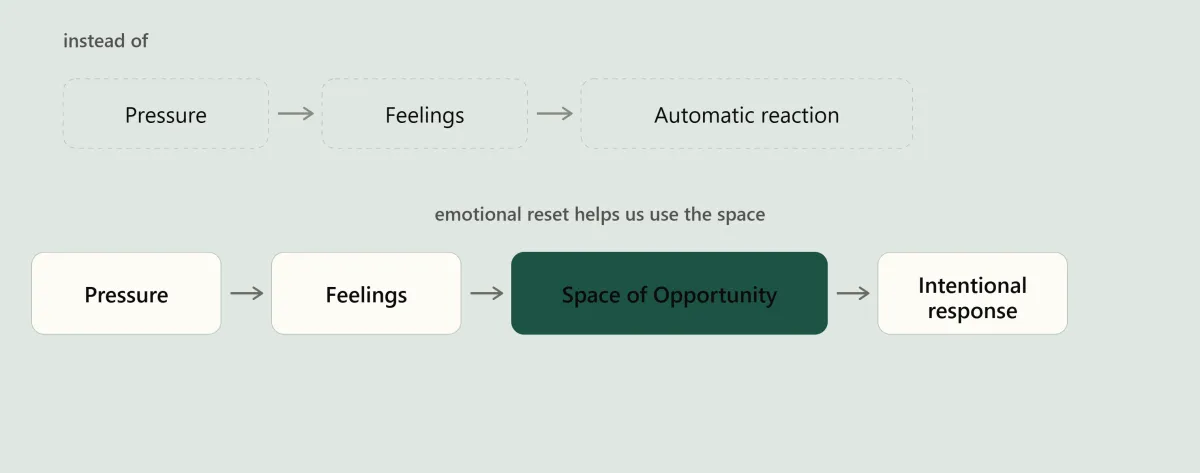
That Space Is Where Choice Becomes Possible.
Peak performers are remembered for how they respond when the stakes are highest.
Leadership is demonstrated in moments of pressure, not in moments of comfort. Intentional responses build trust, credibility, and influence.
Understanding what needs to change is not the same as knowing how to change it in the moments that matter. You may already know that you need to pause, respond differently, or make a more intentional choice. The challenge is responding according to that intention when emotions intensify and a familiar learned reaction is already beginning to surface. Emotional Reset is designed to address the gap between intention and reaction by creating space for a different response when emotions intensify.
The Emotional Reset Perspective
Emotional regulation coaching is valuable.
But understanding your emotions and responding the way you intend are not always the same thing.
When emotions intensify, automatic learned reactions can surface before conscious intention has an opportunity to lead.
Emotional Reset addresses the gap between intention and reaction by creating space for an intentional response when emotions intensify.
Frequently asked questions
Is emotional regulation coaching effective?
Yes. It helps people better understand and navigate emotions.
Why do I still react emotionally even when I'm self-aware?
Familiar learned reactions can surface before there is space to choose how you want to respond.
What's the difference between emotional regulation and Emotional Reset?
Emotional regulation emphasizes understanding and managing emotions. Emotional Reset emphasizes creating space so responses align with intentions.
Can high performers benefit from Emotional Reset?
Yes. It helps them consistently respond the way they intend under pressure.


Ready to Respond Under Pressure the Way You Actually Intend To?
Emotional Reset coaching helps you build the space between emotion and reaction so executive presence, nervous system regulation, and decision making under pressure finally align with how you actually want to respond. Ready to stop reacting and start responding with intention?
Related Articles
How to Improve Decision Making Under Pressure
Everyone has experienced the moment. A difficult conversation begins. An unexpected email arrives. A client
Nona Giddens
Nona Giddens
How to Stop Reacting Impulsively Under
Most people don't intend to react impulsively. They plan to stay calm, listen well, and handle difficult conversations with..
Nona Giddens
Nona Giddens
Why nervous system regulation alone doesn't
You recognize the tightness in your chest. You notice your breathing change. You know your body is responding to ..
Nona Giddens
Nona Giddens
© 2026 Alessandra Group - LLC emotionalresetgroup.com